
The Mesquite Collection · Est. 1989
Texas mesquite flooring and custom mesquite millwork
Harder than white oak, more stable than almost any hardwood, and grown here. ACE Hardwood mills mesquite strip and plank flooring, herringbone, end-grain blocks, stair parts, and lumber in our own Austin warehouse.
- Janka hardness (white oak: 1,360)
- 2,345
- Glue-down failure rate since 1985
- 0%
- The Mesquite Collection founded
- 1989
- Widths, strip to wide plank
- 3"–8"
Grades, patterns, and parts
From clean Old Growth Select to character-rich Rustic, plus the stair parts and lumber that let the whole house match.

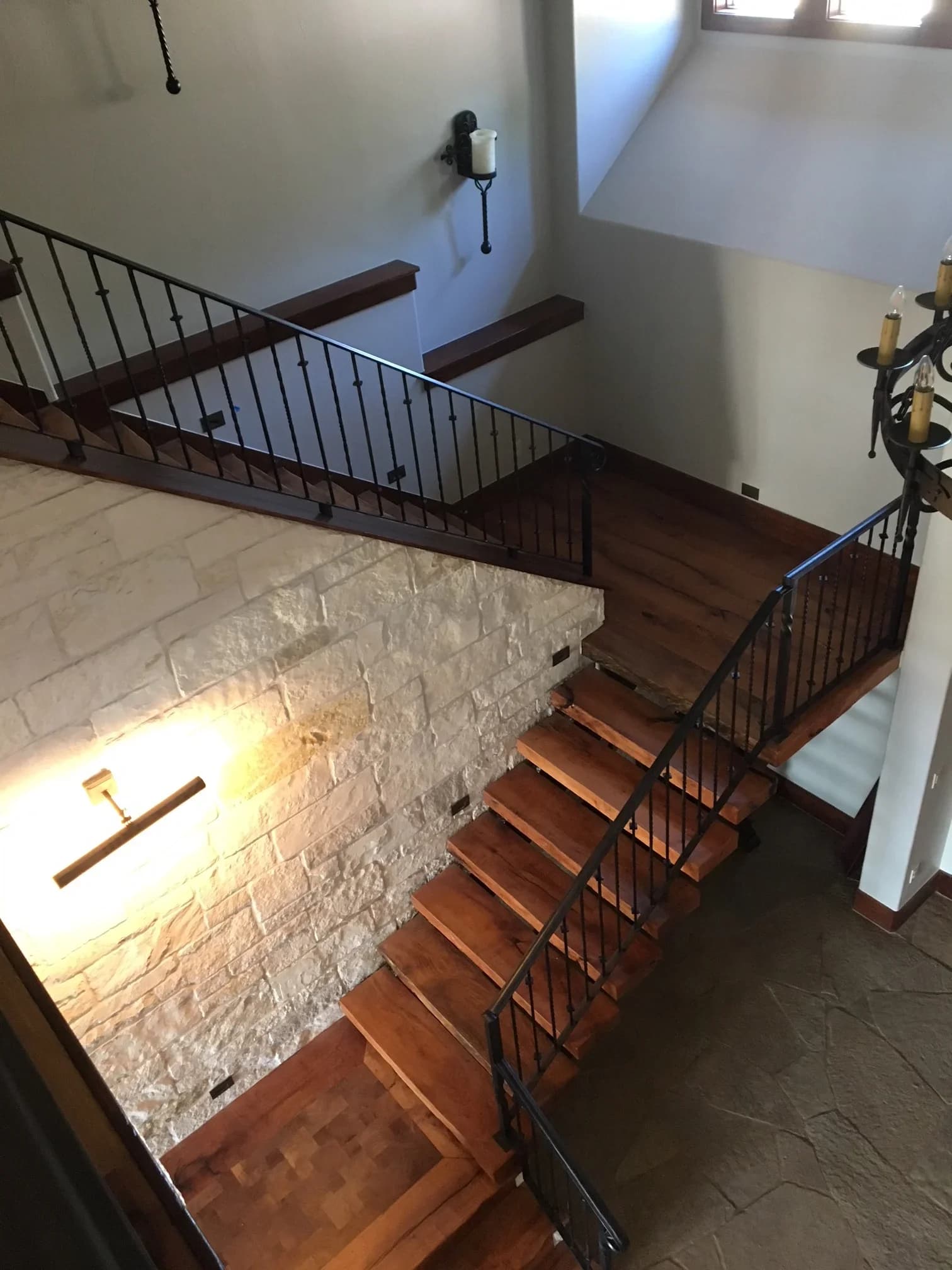
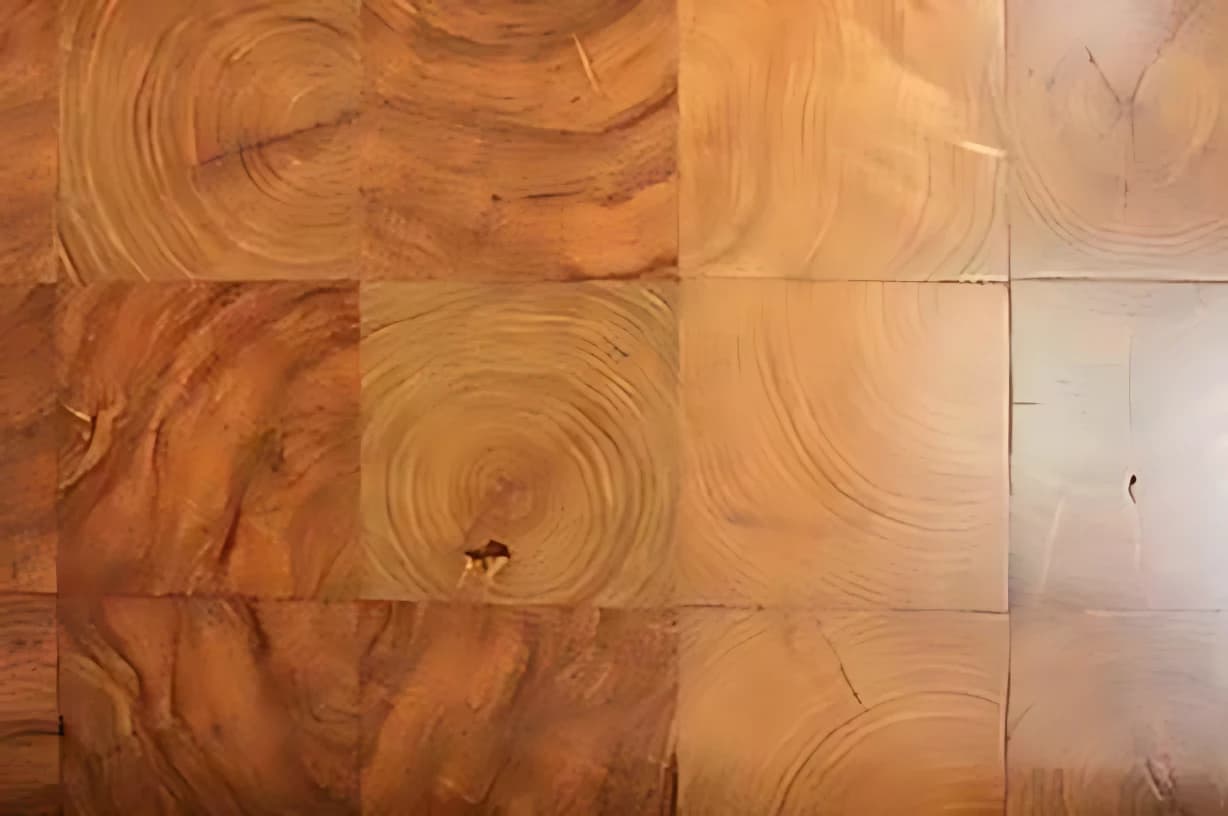
What mesquite is
A collection born in 1989, from a wood nobody else took seriously
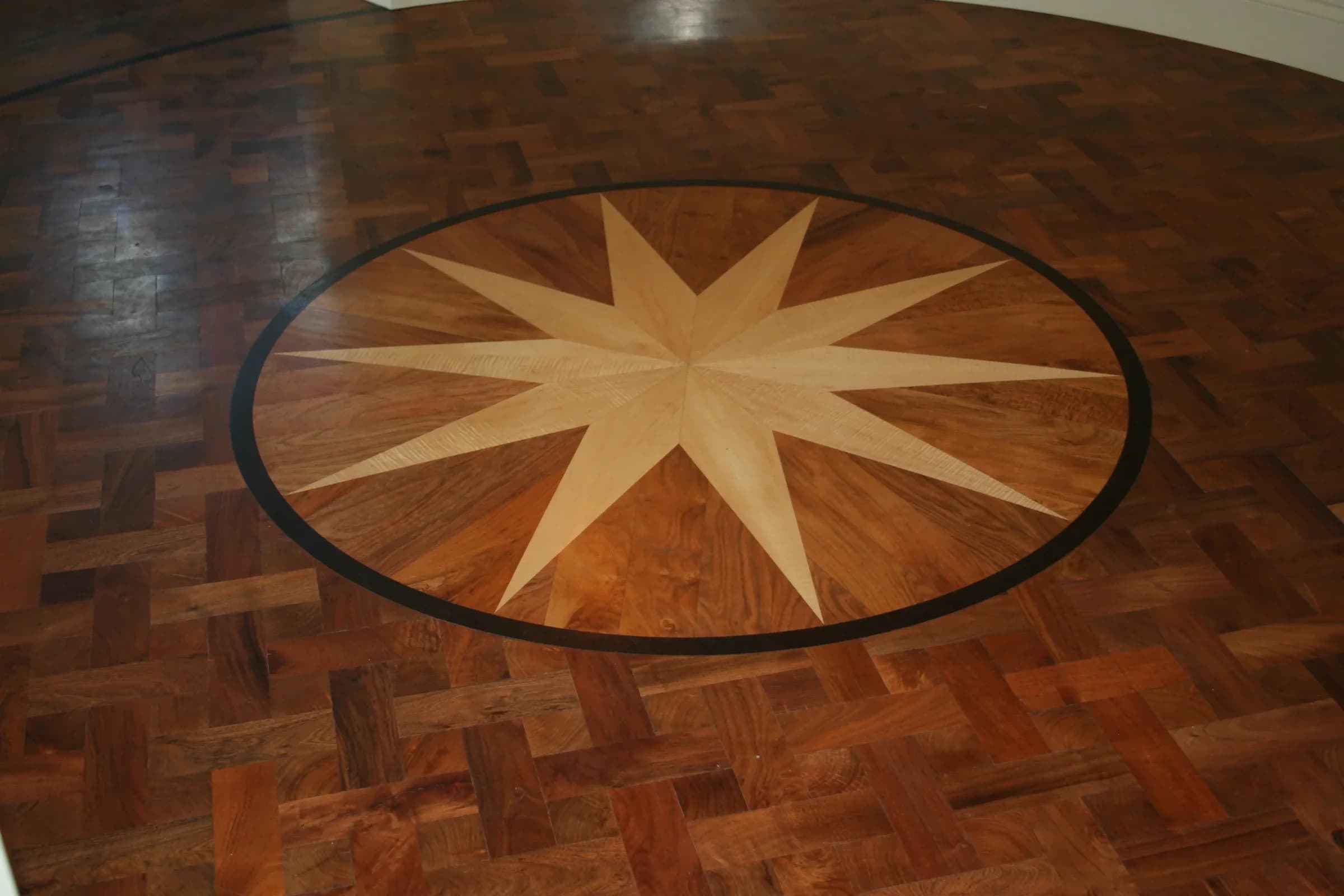
The Mesquite Collection, established in 1989, grew out of our very own family-owned hardwood flooring business. This collection of custom flooring offers wide plank flooring, herringbone patterns, and end-grain blocks, as well as butcher block countertops, stair treads, risers, stair nosings, and transitions.
We feature 3/4" solid unfinished old-growth select mesquite flooring, 1/2" mesquite in 3", 4", and 5" widths, and 3/4" mesquite in 4", 6", and 8" widths — tongue-and-groove milled, with mixed-width patterns available.
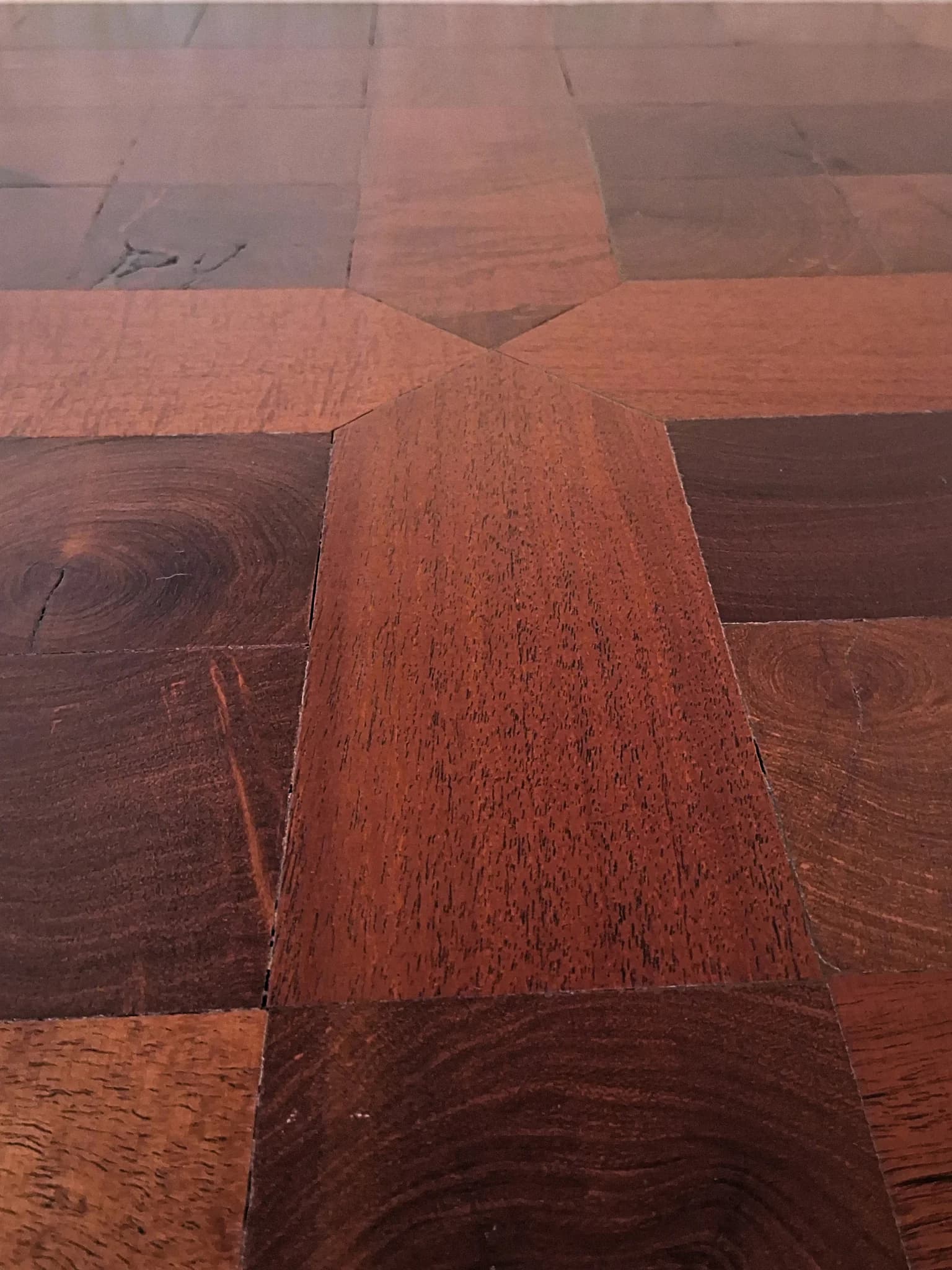
Why it works on a slab
Extreme stability, measured in decades
EXTREME STABILITY: Due to Mesquite's extreme dimensional stability, plank flooring can be glued down directly to the slab in solid form. Mesquite has been successfully glued to concrete slabs in sizes ranging from ½" x 3" to ¾" x 8", and in extreme climates - from Arizona to Florida - with a 0% failure rate since 1985, the year we started manufacturing mesquite flooring.
Its interlocked grain and low shrinkage make mesquite one of the very few hardwoods that can live happily on Texas concrete, in solid form, without an engineered core.
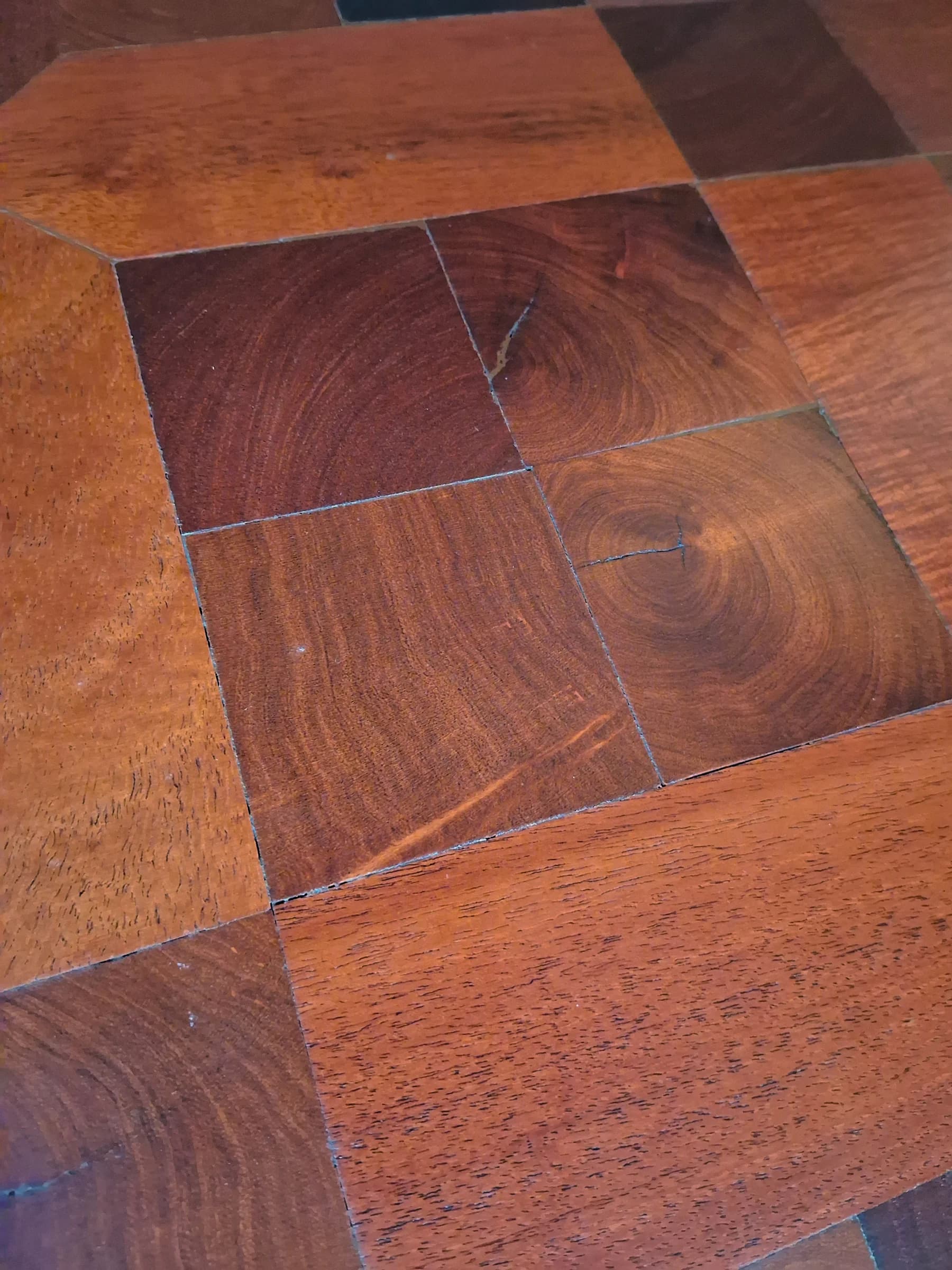
failure rate on glue-down slabs since 1985
An honest material
A floor that helps the land it came from
Mesquite is a legume, not a true tree — ranchers have fought it for generations. Creating a real market for mesquite hardwood gives the land a better answer than burning or poisoning it, and virtually nothing from the tree is wasted.
Anthropologists trace mesquite's path north from South America hundreds of years ago. It has fed, sheltered, and furnished the arid Southwest ever since — floors are only its latest chapter.
Everything we know about mesquite, on the record
Properties & characteristics
Due to Mesquite's extreme dimensional stability, plank flooring can be glued down directly to the slab in solid form. Mesquite has been successfully glued to concrete slabs in sizes ranging from ½" x 3" to ¾" x 8", and in extreme climates - from Arizona to Florida - with a 0% failure rate since 1985, the year we started manufacturing mesquite flooring.
Light brown to dark reddish brown.
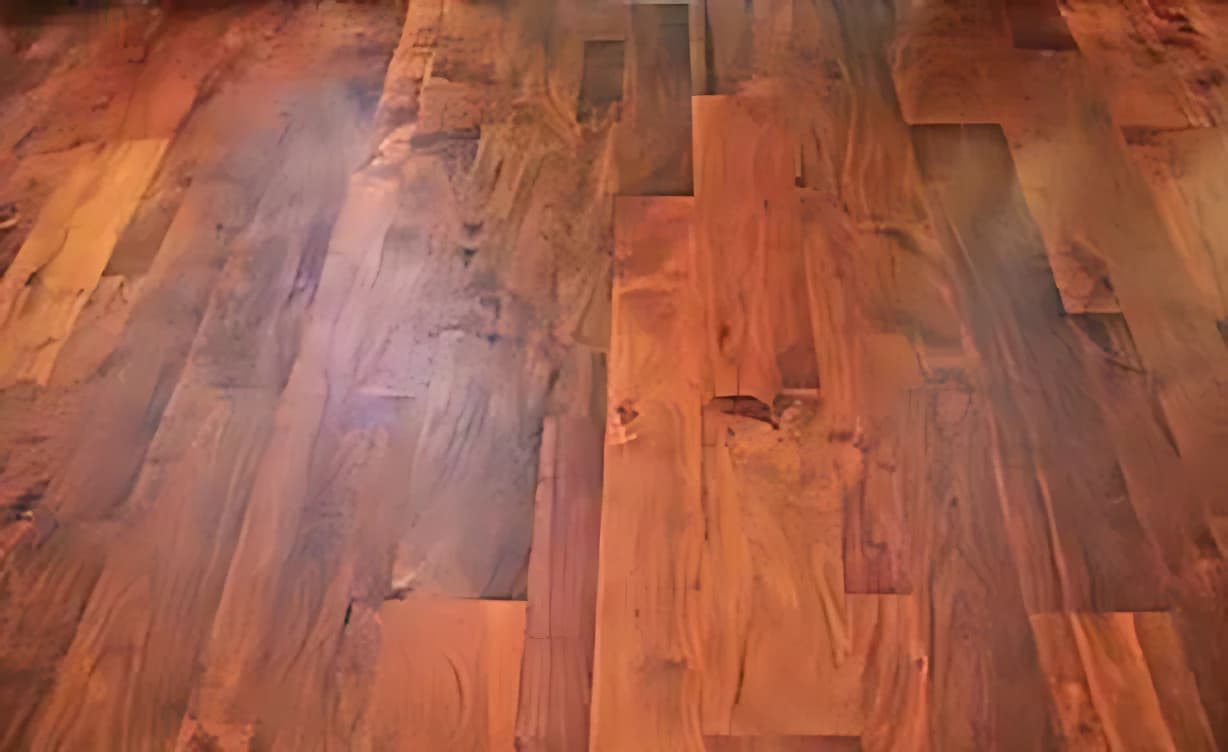
High in character, with ingrown bark and mineral streaks. Most commonly used in flooring and end-grain block, which has small irregular cracks radiating across the grain. PROPERTIES — HARDNESS (JANKA): 2345 (82% harder than Northern Red Oak).
Excellent (3.2; over 250% more stable than Northern Red Oak).
Very good machining qualities.
Proper nailing schedule required.
Plain-sawn can be sanded to a smooth surface. End-grain requires a coarser abrasive to flatten; it is recommended that it be flattened by sanding at a 45-degree angle to the grain.
40 or 50 at a 7-15 degree angle with the grain.
60 or 80 straight with the grain.
80 or 100.
100.
80 or 100.
120.
No known problems.
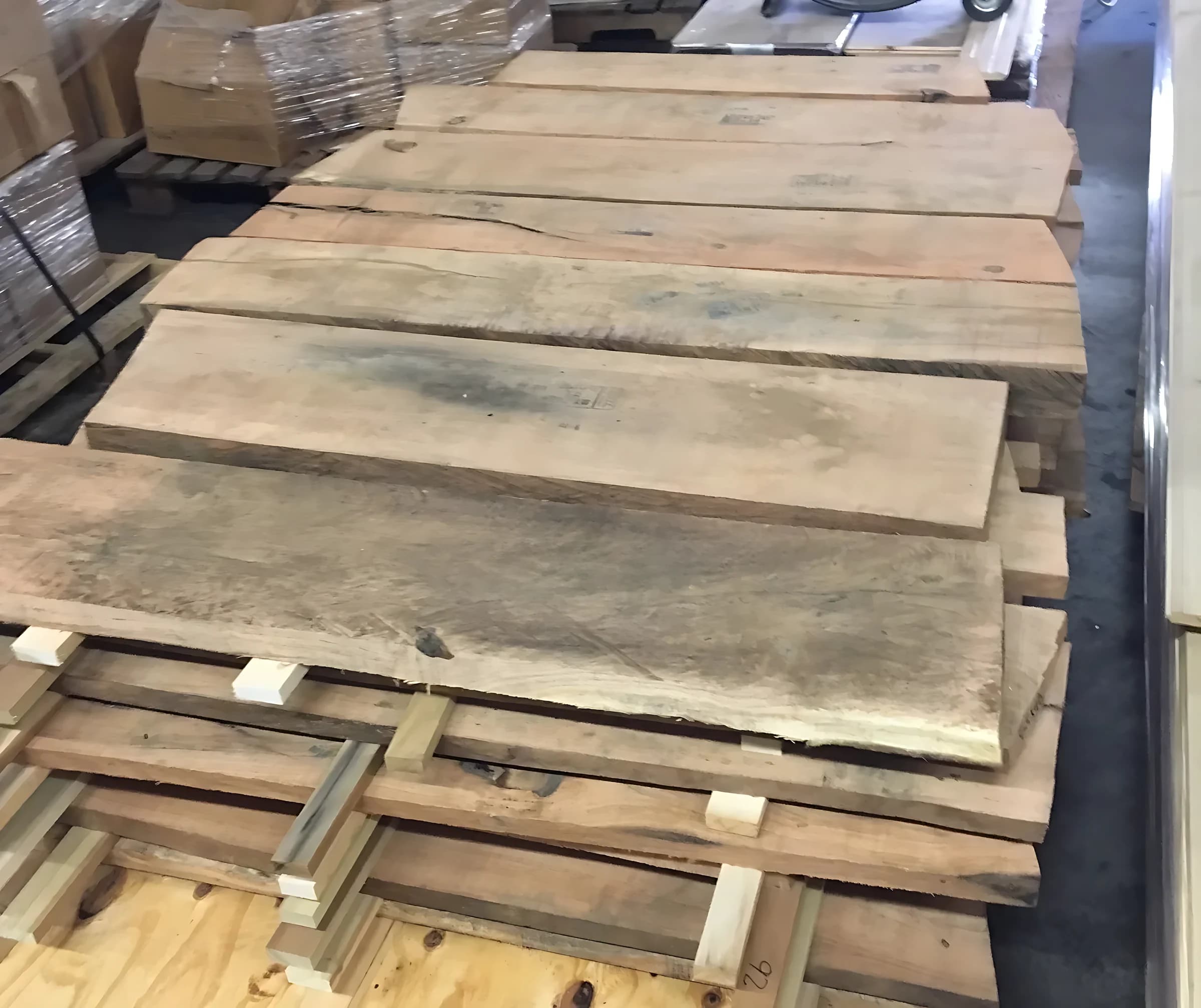
End-grain block usage results in a hard, high-wear surface. Produces only shorter-length boards.
North America, Central America, South America.
Limited availability.
Hardness — Janka rating
Dimensional change
Environmental benefits
Mesquite is a member of the legume family, making it is a shrub, not a tree. Ranchers have long considered mesquite a nuisance, or trash tree, for generations and have tried many different ways to eliminate it from their land. Creating a viable market for mesquite could help to reduce this practice.
Virtually nothing from a mesquite tree is wasted. The beans are high in sugar and proteins and make good cattle feed, another product to sell. Native Americans discovered many medicinal uses for the beans as well.
Tea made from the beans is said to be a good antiseptic for superficial wounds and to settle the stomach. The limbs are cut into end grain blocks that make beautiful flooring patterns. The larger limbs and trunks are sawn into lumber for cabinets, furniture and flooring.
The fall off and waste is made into mesquite chunks for the BBQ industry. Finally, the burl from the stumps makes beautiful material for artisans to do turnings and decorative pieces. No heavy industry is required to produce any of the products mentioned above and there are no toxic by-products to pollute the environment.
ECONOMIC IMPACT: Historically, in Central and South America, mesquite was harvested primarily for firewood and charcoal. Beautiful old growth trees were being cut down to turn into firewood. It takes four tons of wood to make one ton of charcoal.
By developing a market for mesquite lumber, the people who harvest mesquite can sell it for a significantly higher price than before. This has created a completely new industry in all the Americas as well as a more productive use of a valuable resource. In addition, since mesquite grows in arid climates, there is no threat to the rain forest.
AVAILABILITY AND RESOURCE MANAGEMENT: There is an almost limitless supply of mesquite. According to David Miller, President of Los Amigos del Mesquite, Texas has about 55 million acres of land with mesquite on it. At the current rate of consumption (approx.
5000 acres per year) and assuming no re-growth from cut trees, there is an 11,000-year supply of mesquite in Texas alone! It is estimated that Argentina has ten times more mesquite than Texas. There is no shortage of mesquite.
It is important to note that The Mesquite Collection has the capacity to fulfill orders of significant quantity. However, dealing in such quantities will require planning and projections to insure product will be available when needed.
A short history
Dating back hundreds, possibly thousands of years, mesquite has played a significant role in the lives of those who have lived in harsh arid climates throughout the world. Anthropologists suspect that mesquite's origins are in South America and that the seeds were carried north by cattle and other animals that were herded north into what is now the Southwestern US. Throughout history, mesquite has been used as a building material and as a source for warmth & food.
The Spanish Missionaries quickly discovered mesquite's beauty and durability and used it as a building material for missions that stand to this day. Shipwrights also discovered that mesquite was virtually impervious to water and used the wood to construct fishing vessels. There are still examples of these boats in the shrimping fleet of certain regions of Mexico after 40-50 years!
Will the color change?
Yes, all hardwood floors will slightly change color over periods of time, especially if they are in contact with direct sunlight. The most noticeable color change will happen in the first few months after being installed. All of these color changes are normal and to be expected.
Wood is a natural product and changes in color will occur due to the wood's reaction to the environment. A dark wood such as walnut will lighten and a lighter wood species like oak, will darken. We recommend not using area rugs, or moving them around periodically in the first two years.
This allows the flooring to mature in color evenly throughout the entire space.
Common questions
Mesquite flooring, answered directly
Does ACE Hardwood sell mesquite flooring?
Yes. ACE manufactures mesquite strip and plank flooring in multiple grades — Old Growth Select, Local Mesquite Select, Local Mesquite, and Local Mesquite Rustic — plus herringbone, end-grain blocks, and mixed-width layouts.
Can ACE Hardwood make mesquite stairs and trim?
Yes. The Mesquite Collection includes stair treads, risers, nosings, transitions, T-moulding, reducers, mesquite lumber, and special orders milled in Austin.
What is rustic mesquite flooring?
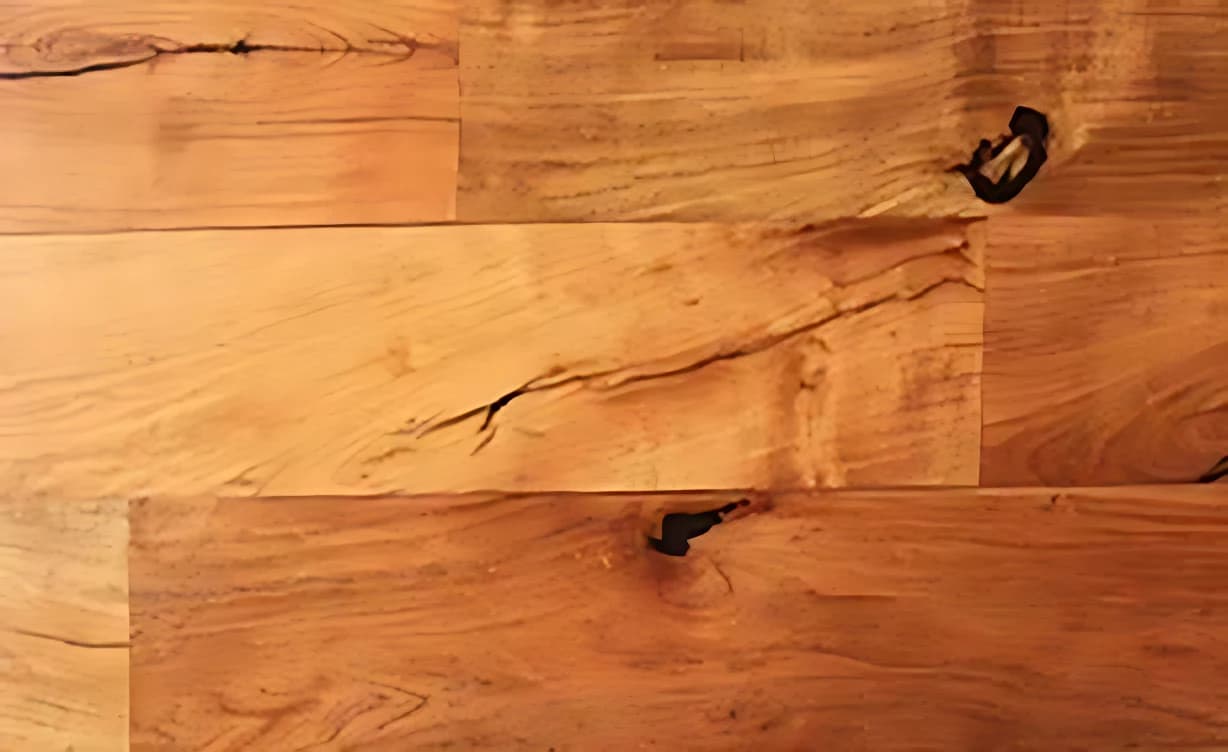
Rustic mesquite allows natural cracks and knots as long as they are fillable, with the same milling quality as Select grading. It suits character-rich floors and Texas-style homes.
Is mesquite available in herringbone or end-grain patterns?
Yes. ACE mills mesquite herringbone and end-grain block patterns, along with mixed-width plank layouts.
Can mesquite really be glued straight to a concrete slab?
Yes — because of mesquite's extreme dimensional stability, solid mesquite plank can be glued directly to the slab. ACE has done it in sizes from 1/2" x 3" to 3/4" x 8" with a 0% failure rate since 1985.
The showroom
Stand on mesquite before you decide
The showroom keeps every grade of The Mesquite Collection on the floor — old growth, select, rustic, end-grain — next to the stair parts and trim that match.
923 Westbank Dr.
Austin, TX 78746 · West Lake Hills
Monday – Friday, 8:00 a.m. – 5:00 p.m.
Walk-ins welcome.